
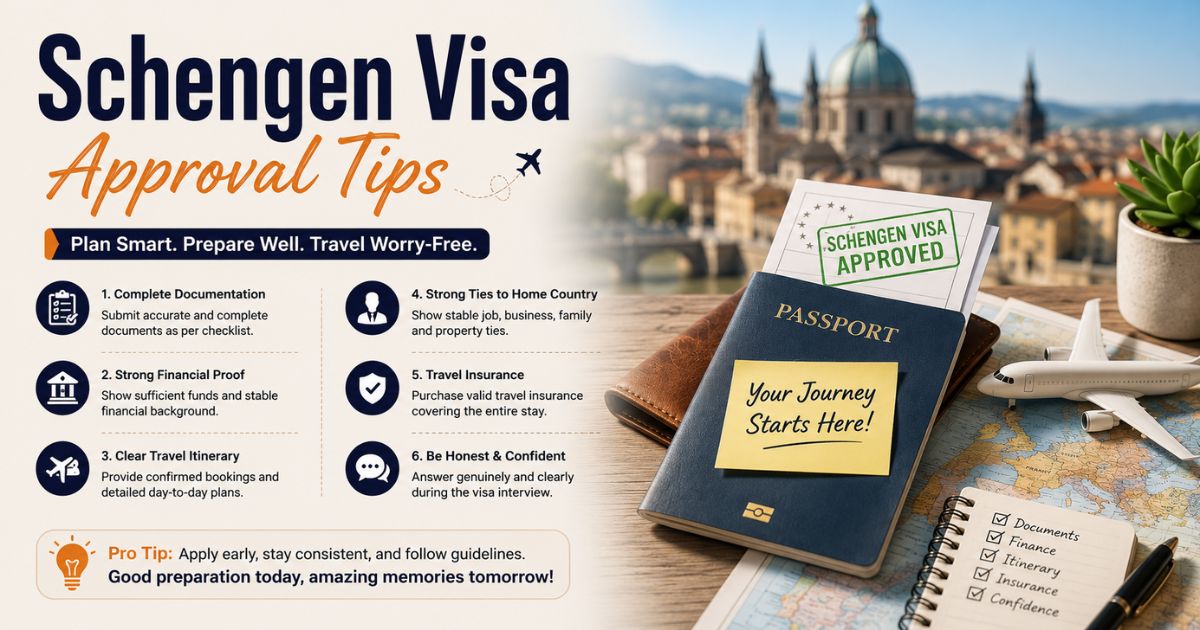
Few things feel as exciting as booking flights to Europe, until the Schengen visa paperwork lands on your desk. For many travelers, the visa stage is the most stressful part of planning a European holiday, far more nerve-wracking than choosing between Paris and Prague.
The good news is that visa officers aren't looking for reasons to say no. They're looking for a clear, consistent, and credible travel story. If your application tells that story well, your odds of approval go up considerably. This guide walks through the practical, real-world strategies that genuinely move the needle, from timing your application to picking the right consulate and building a documentation file that holds up to scrutiny.
Why the Schengen Visa Process Feels So Unpredictable
The Schengen Area covers nearly thirty European countries, and each consulate handles applications a little differently. Some embassies process files in days, others take weeks. Some ask for minimal paperwork, others want every detail accounted for. This inconsistency is exactly why travelers often feel like they're guessing.
Add in the seasonal crunch, applications surge sharply before summer holidays and around Christmas and New Year, and it's easy to see why appointment slots vanish and processing slows down. Understanding this rhythm is the first step toward working around it instead of against it.
Apply Early, Especially Outside Peak Season
Timing is one of the simplest variables you can actually control. Most Schengen consulates allow applications up to six months before travel, and submitting too close to your departure date is one of the most common, and most avoidable, mistakes.
A good rule of thumb is to apply at least six to eight weeks before your trip. This gives the consulate breathing room to process your file without rushing, and gives you a buffer if they request additional documents. If you can avoid applying in late November or December, when holiday travel demand peaks, do so. Quieter months tend to mean faster appointments and less administrative backlog.
Choose Your Consulate Strategically, Not Randomly
Where you apply matters as much as how you apply. Schengen rules require you to submit your application through the consulate of your main destination, meaning the country where you'll spend the most nights. If your trip is evenly split across multiple countries, you apply through the country you enter first.
Some embassies have historically been more accessible than others, often due to lower application volumes or more efficient consular operations. Smaller or less-visited Schengen countries sometimes process applications faster simply because they receive fewer of them compared to heavily booked destinations. That said, your itinerary should always reflect your genuine travel plans. Trying to apply through a country you don't actually intend to visit, often called visa shopping, can backfire and raise red flags rather than improve your odds.
Build a Documentation File That Tells a Consistent Story
If there's one thing that separates approved applications from rejected ones, it's consistency. Every document you submit should support the same narrative: where you're going, how long you're staying, how you're paying for it, and why you'll return home afterward.
Financial Proof
Bank statements should show stable, traceable funds over the past few months rather than a sudden lump-sum deposit right before applying. Consular officers are trained to notice irregular financial activity, and unexplained spikes can prompt extra questions or outright refusal.
Travel Insurance
Schengen rules require travel medical insurance covering at least 30,000 euros across all member countries, including emergency treatment and repatriation. Choose a policy that explicitly states this coverage, since vague or partial policies are a common reason for delays.
Accommodation and Itinerary
Confirmed hotel bookings, a day-by-day itinerary, and round-trip flight reservations all reinforce that your trip is real and well-planned. You don't need to purchase non-refundable tickets at this stage; reservation confirmations are typically enough.
Proof of Ties to Home
Employment letters, property documents, family records, or enrollment proof for students all help demonstrate that you have strong reasons to return home after your trip. This is one of the most heavily weighed factors in any decision.
Write a Cover Letter That Connects the Dots
A short, clear cover letter can tie your entire application together. It should explain who you are, why you're traveling, your planned dates, how the trip is financed, and your intention to return. Think of it as a one-page summary that makes the consular officer's job easier rather than harder.
Avoid generic templates. A cover letter that specifically references your actual itinerary, your job, and your travel history feels far more credible than a copy-paste version that could apply to anyone.
Double-Check Everything Before Submission
Most visa refusals don't come from dishonesty; they come from small inconsistencies. Mismatched dates between your flight reservation and hotel booking, a passport with too little validity remaining, or missing signatures can all trigger a rejection that has nothing to do with your actual travel intentions.
Before you submit, go through your checklist line by line. Confirm your passport is valid for at least three months beyond your planned return date, your photos meet the consulate's exact specifications, and every form is signed where required.
Prepare for the Interview, If Required
Some applications include a short interview or biometric appointment where you may be asked basic questions about your trip. Keep your answers simple, honest, and aligned with your written application. Knowing your itinerary, your accommodation details, and your return date off the top of your head shows preparedness and confidence.
Key Takeaways
- Apply six to eight weeks ahead of travel, and avoid the November-December rush whenever possible.
- Apply through the consulate of your main destination or your first point of entry, never a country you don't plan to visit.
- Keep your financial documents, insurance, accommodation, and itinerary aligned and consistent.
- A clear, personalized cover letter strengthens your entire application.
- Small paperwork errors, not dishonesty, cause most rejections, so review every detail carefully.
What Travelers Should Know
Approval trends shift from year to year, and what worked for a friend last season may not reflect current consulate workloads. Rather than chasing the "easiest" country to apply through, focus on building a genuinely strong file for your actual trip. A well-documented application for a realistic itinerary will consistently outperform a thin application aimed at a supposedly lenient embassy.
It's also worth budgeting extra time for appointment availability, not just processing. In busy seasons or at high-demand consulates, simply getting a slot can take longer than the visa decision itself. Booking your appointment as soon as the window opens is often more valuable than any other single step.
Finally, remember that a rejection isn't necessarily final. Most refusal letters state a specific reason, and a focused reapplication that directly addresses that issue, whether it's stronger financial proof or a clearer itinerary, has a real chance of succeeding.